Overview
Travel back in time with me on a powerful journey through Luxembourg’s World War II history , where tales of heroism and heartbreak unfold against the backdrop of medieval castles and serene countryside. This WWII Battlefields and Castles tour is especially close to my heart – as a local guide, I’ve heard the stories from my grandparents who lived through the war, and I’m honored to share them with you. Over the course of a full day, we’ll trace the footsteps of American General George S. Patton in Luxembourg, pay our respects at moving military cemeteries, and explore castles that witnessed fierce Battle of the Bulge fighting in 1944-45. Don’t worry, it’s not all somber – there are uplifting stories of liberation and even some surprising cultural gems along the way (including a unique photo exhibit hidden in a castle!). If you’re a history enthusiast or simply curious about the impact of WWII in this region, you’ll find this tour informative, engaging, and deeply moving .
Following Patton’s Footsteps: Remembrance and Honor
Our first stop sets the tone: the Luxembourg American Cemetery and Memorial in Hamm, just outside Luxembourg City. This beautifully maintained cemetery is the final resting place of over 5,000 U.S. soldiers who gave their lives in liberating Europe . It’s a poignant sight – row upon row of white crosses and Stars of David on green lawns, shaded by maple and oak trees. Here lies General George S. Patton Jr. , buried not under a grand monument, but modestly among his men (by his request). I’ll share the story of how Patton’s Third Army raced north to Luxembourg and Belgium during the Battle of the Bulge to relieve the besieged town of Bastogne. Standing at Patton’s grave, often adorned with American flags and flowers left by visitors, we reflect on leadership and sacrifice. It’s an emotional moment for many Americans; I’ve seen veterans and descendants with tears in their eyes, and as a local I express our enduring gratitude. We’ll also see the chapel and memorial wall inscribed with the names of missing soldiers – I can help locate a particular unit or battle name if you have a personal connection. We take our time here, in silence or with stories, as you prefer, to honor those who fell.
A short drive away, we encounter a contrasting scene at the German War Cemetery in Sandweiler . Tucked in the woods, this cemetery is darker, with gray crosses and groups of names on flat plaques. Nearly 11,000 German soldiers are buried here, many in a mass grave. Visiting both cemeteries back-to-back offers a profound perspective on the war’s human cost from both sides . As we walk the grounds, I’ll discuss how Luxembourg, having been occupied by Nazi Germany, now works to reconcile with that past – remembering that these were young men too, many of whom had no choice. It’s a sober but important stop, and it underscores the tour’s theme: reconciliation and reflection . Together, we’ll ponder the peaceful Europe that emerged from such bloodshed, a peace symbolized by the European Union Luxembourg helped found (tying back to our previous tour!).
Prefer a private route instead of planning every connection?
Tell us your travel date, group size and interests. We will suggest the best route.
Ask for a routeCastles, Museums, and Battlegrounds in the Ardennes
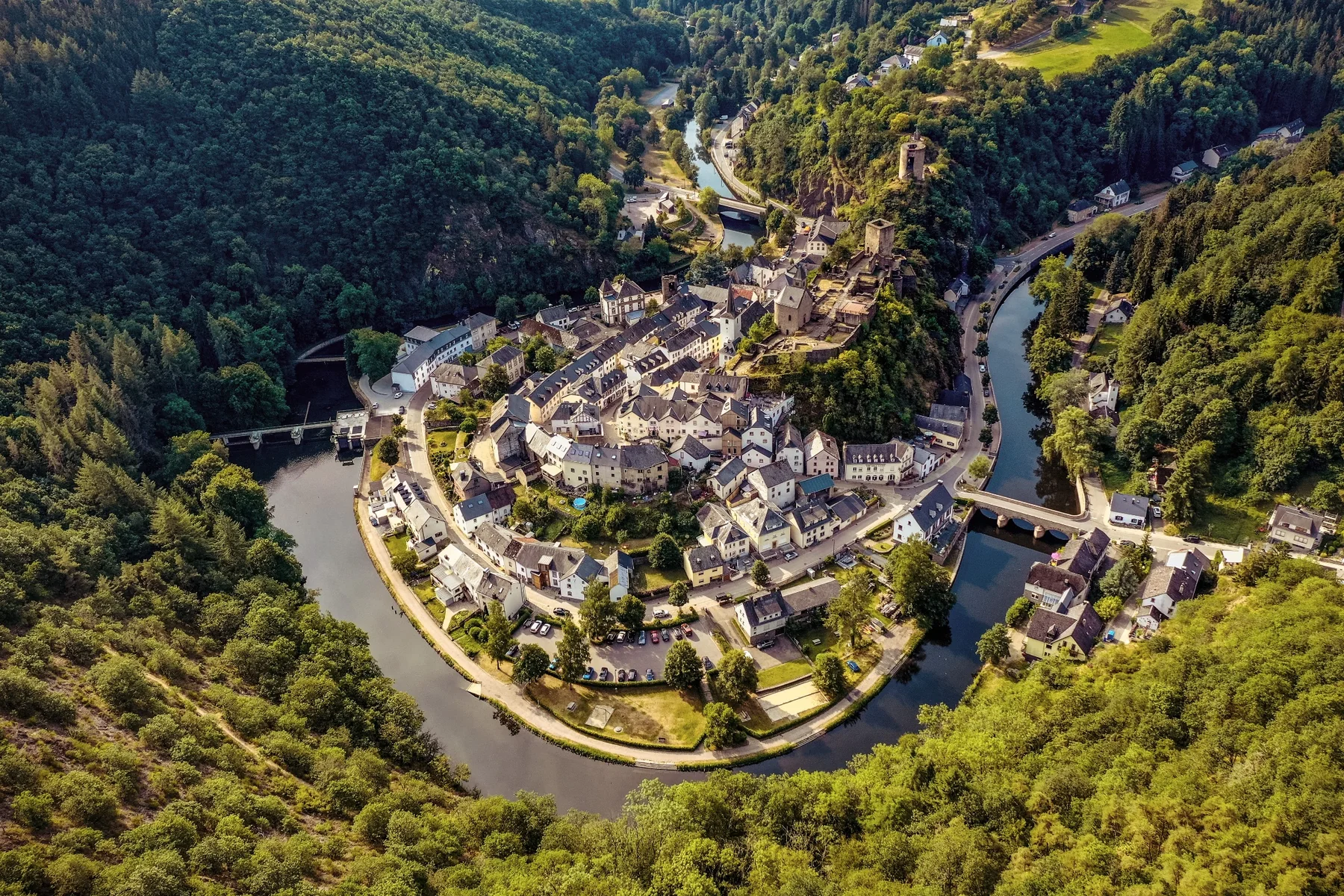
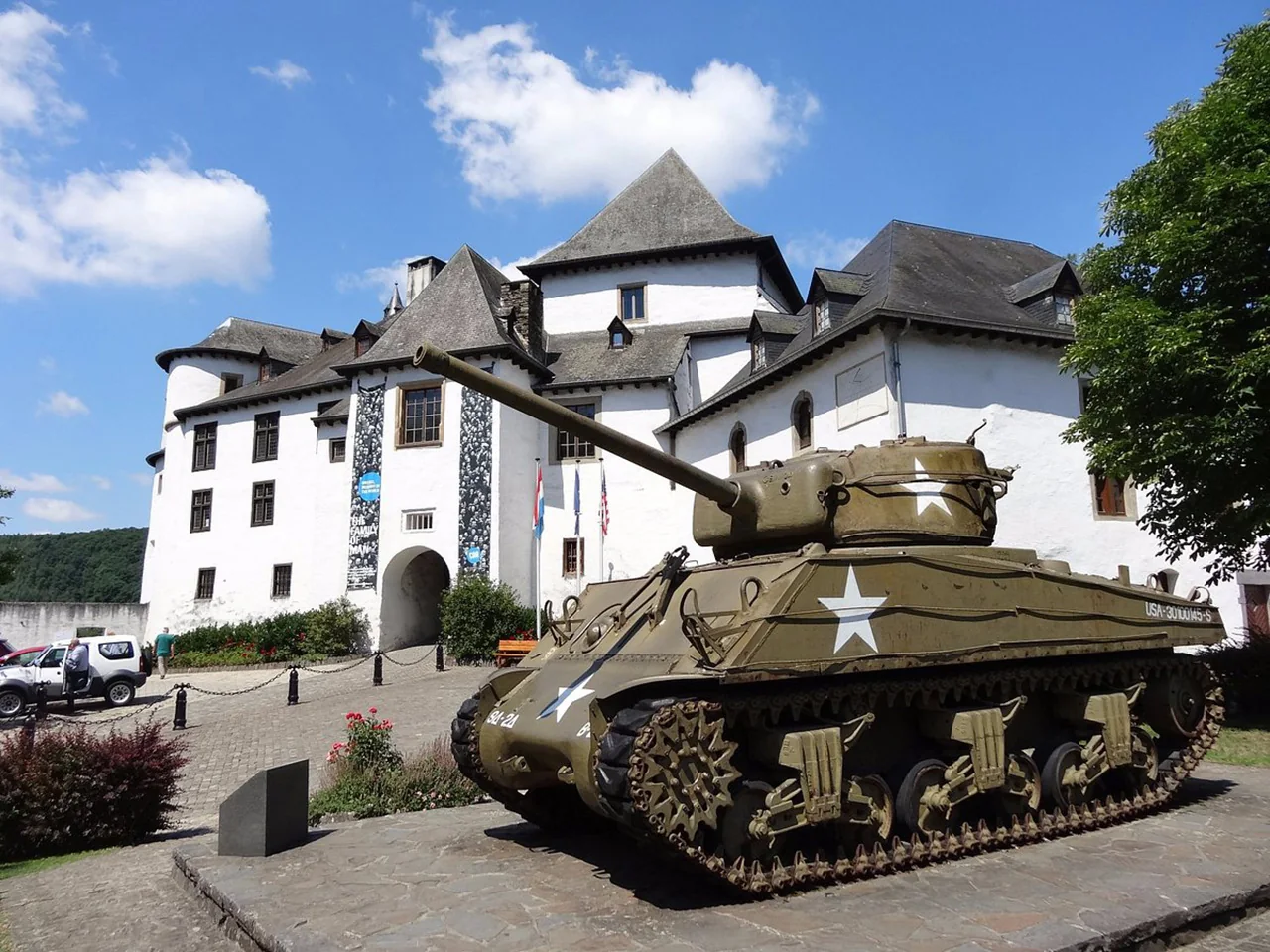
Leaving the cemeteries, we drive north into the Ardennes region (known locally as Éislek ). The scenery of dense forests and hills is beautiful, belying the brutal winter battles fought here in 1944-45. Our next destination is Clervaux , a charming town nestled in a narrow valley – and a key location during the Battle of the Bulge. Looming above Clervaux is its medieval castle , which saw heavy fighting in December 1944 as American forces made a valiant stand against the German offensive. The castle was badly damaged but restored after the war. Today, Clervaux Castle houses two remarkable attractions: the Museum of the Battle of the Bulge and the Family of Man photo exhibition .
We’ll first explore the Battle of the Bulge Museum (also called the Museum of the Ardennes Counteroffensive) inside the castle’s stone walls . It’s filled with authentic artifacts from the winter of 1944: American and German uniforms, weapons, personal letters, and detailed dioramas of local battle scenes. I’ll point out the displays that depict Clervaux’s own siege – including a model of an American Sherman tank that defended the town (you can actually see a real Sherman tank outside in Clervaux’s town square, which we’ll check out!). Through these exhibits, you’ll learn about heroes like Sergeant Day Turner, who earned the Medal of Honor in Clervaux, and the civilians who sheltered in the abbey during the fighting. It’s tangible history – you can almost feel the cold and fear from those days, but also the courage.
Upstairs (or next door), we’ll change gears to experience “The Family of Man” , a UNESCO-listed photography exhibition curated by Luxembourg-born Edward Steichen. It’s one of my favorite hidden gems to show visitors. This collection of 503 photographs from around the world celebrates peace and human unity – a touching counterpoint to the destruction we just discussed . Steichen created it after WWII as a message of hope , and seeing it here in Clervaux Castle – which witnessed war – is incredibly fitting. As your guide, I’ll highlight a few powerful images in the exhibition and share how this exhibit traveled the globe before finding a permanent home here in Clervaux. Many travelers find this to be an unexpectedly emotional highlight; it reminds us what those soldiers fought for – the shared humanity and freedom depicted in these photos.
After Clervaux, we’ll continue to Wiltz , another town marked by war. Perched on a hilltop is Wiltz Castle , where we’ll visit the National Museum of Military History – Battle of the Bulge (formerly a Museum of the Resistance) . This museum complements what we saw in Clervaux, offering a broader view of Luxembourg’s experience in WWII. Wiltz was one of the first towns attacked at the start of the Battle of the Bulge, and its people famously stood up to the Nazis earlier in 1942 by refusing to celebrate Hitler’s birthday – a bold act of resistance. Inside the castle, we’ll find exhibits of civilian life during the occupation, resistance pamphlets and radio sets, and more wartime equipment. There’s even a section with life-size dioramas – one depicts American GIs and local Luxembourgers sharing Christmas Eve dinner amid the battle (a heartwarming true story), and another shows a makeshift field hospital in a cellar. Walking through, you get a sense of both the military tactics and the human stories – we’ll talk about everything from how locals hid Allied airmen to the hardships of winter 1944 with no heating and scarce food.
Before leaving Wiltz, I’ll show you the town’s memorials – there’s a moving statue called “The Wiltz NUTS Monument” commemorating General McAuliffe’s famous reply (“Nuts!”) to the German surrender demand in Bastogne, and another honoring Luxembourgish resistance fighters. We’ll also peek over the castle terrace for a panoramic view of the Wiltz valley (and perhaps imagine the rumble of tanks that once echoed here).
Tips for a Memorable WWII Tour
• Wear comfortable, respectful attire: This is an immersive day with a mix of outdoor and indoor sites. Good walking shoes are a must – we’ll be walking on grass at the cemetery (heels would sink!), and cobblestones in castle courtyards. At the cemeteries, it’s a place of respect, so I suggest modest dress (e.g. avoid flashy logos or very revealing clothing). Many visitors like to wear or carry something patriotic (like a small flag pin) at the American cemetery; you’re welcome to, though certainly not required.
• Weather considerations: Much of this tour runs rain or shine . The Ardennes can be chilly or wet, much like it was during the Bulge. Bring a jacket or layer up – even in summer, the mornings up north can be cool. If visiting in winter, dress warmly (hat, gloves, boots) since snow is possible and we’ll spend time outside discussing battles on the very ground they happened. I carry extra umbrellas in case of rain. A little mud won’t stop us from reaching a monument or tank display, but we’ll tread carefully.
• Photography: You’re welcome to take photos at all locations. At the American Cemetery, photography is allowed and you’ll want to capture the sea of crosses – it’s very poignant. Just be mindful of other visitors (especially if any ceremonies or flag-folding is happening). In museums, flash is typically not allowed to preserve artifacts, but you can snap pictures of the exhibits and the castle interiors. I often help my guests photograph themselves beside the Sherman tank in Clervaux or the Patton gravestone – these make meaningful trip mementos.
• Engagement: Feel free to ask questions or share family stories . If your grandfather fought in the Bulge or your relative was in the 101st Airborne, let me know! I can often tailor some commentary or find a specific grave or mention a particular unit’s action that connects to you. This tour is as much about personal connection as history. As we drive between sites, I sometimes play era-appropriate music or audio clips (for example, a snippet of a Roosevelt speech or Glenn Miller’s tunes that soldiers listened to) – it adds atmosphere.
• Lunch and breaks: We’ll be covering a lot of ground, so I ensure we take a break to recharge. A popular option is a cozy local inn in Clervaux for lunch, where you can warm up with Luxembourgish Bouneschlupp (green bean soup) or just a good sandwich and coffee. Alternatively, we can grab a quick bite from a bakery and picnic if you prefer to keep moving. I also know all the best places for a restroom and a quality cup of tea along the way (trust me, this is vital knowledge on a full-day tour!). Snacks in the car are fine too – I usually bring some Luxembourgish chocolates to sweeten our journey.
This WWII Battlefields and Castles tour is more than just sightseeing – it’s time travel with a purpose . By standing on these battle-scarred grounds and hearing the stories of bravery and sacrifice, you’ll gain a profound appreciation of what freedom cost in this little country. Yet amidst the history’s gravity, there are inspiring moments – the beauty of the Ardennes, the solidarity of Allies and locals, and the culture that rebounded in peace. I’m passionate about sharing these lessons of the past and ensuring the memories of 1944 live on. When we finish at day’s end, gazing over a peaceful Luxembourg landscape, I hope you’ll feel not only enriched with knowledge but also touched in heart – carrying forward the legacy of the Greatest Generation.
Prefer a private route instead of planning every connection?
Tell us your travel date, group size and interests. We will suggest the best route.
Ask for a routePrivate Tour Routes Mentioned in This Guide
- WWII Battlefields & Castle + Abbey: A private history tour tracing the Battle of the Bulge, General Patton’s footsteps, memorial sites and northern Luxembourg’s wartime landscape.