Overview
Discover a side of Luxembourg that’s deeply intertwined with the story of modern Europe. On the European Luxembourg tour, I’ll take you through key sites that highlight Luxembourg’s outsized role in European history and unity – from the bustling European Quarter in Luxembourg City to the tranquil village of Schengen , where the famous agreement that erased Europe’s borders was signed. As a proud Luxembourger and European, I’m excited to share how our small country became one of the three official capitals of the EU and a symbol of open borders and international cooperation. This tour blends history, politics, and culture – all delivered in a friendly, engaging way (no dry lectures here, I promise!). Whether you’re a history buff, a politics nerd, or just curious what makes Luxembourg tick, you’ll come away with a deeper appreciation of how this little nation helped shape Europe.
Luxembourg City – The European Quarter and Beyond
Our journey starts in Luxembourg City , the cosmopolitan capital often called the “ Gibraltar of the North ” for its dramatic clifftop setting and fortress history. But today, we focus on its modern role as a European capital . Together with Brussels and Strasbourg, Luxembourg City is home to several major EU institutions . We’ll head to the Kirchberg Plateau , the sleek district across the Red Bridge where the EU’s presence is most visible. As we drive up, you’ll notice the change in architecture – historic sandstone gives way to contemporary glass and steel. Here stands the European Court of Justice , its twin golden tower blocks shimmering (these towers house the EU’s highest court, which rules on EU law for all member states). We’ll stop by the Court’s plaza, where the flags of all 27 EU countries flutter in the breeze – a perfect spot for a photo and a chat about what the Court does. I’ll share an insider tidbit: Luxembourg’s multilingual culture is a big asset here, as cases are heard in many languages and then deliberated in French.
Next, just around the corner is the European Commission’s Luxembourg offices and the European Parliament’s Secretariat (while the Parliament’s main chamber is in France, a lot of its administration happens here). I’ll point out the distinctive Schuman Building , named after Robert Schuman – a founding father of the EU who was actually born in Luxembourg! Nearby, we’ll visit the Europa Experience interactive exhibit (if open), where you can step into a replica Parliament setup and learn about how EU decisions are made. It’s hands-on and fun. One of my favorite stops in the area is a piece of the Berlin Wall on display outside one of the buildings – a tangible reminder of Europe’s journey from division to unity. Standing there, I often reflect on how far we’ve come since the Cold War, and I’ll share stories of Luxembourg’s own experience during those pivotal 20th-century moments.
Before leaving the city, we’ll drive by the Place de l’Europe , a public square often used for open-air events, flanked by the ultramodern Philharmonie concert hall (with its forest of white columns) and MUDAM (the Museum of Modern Art, designed by the famed architect I.M. Pei). This mix of cultural and political landmarks shows Luxembourg City’s dynamic character – rooted in history but very much forward-looking. As we cross back over the Grand Duchess Charlotte Bridge (a.k.a. the Red Bridge), I’ll encourage you to glance down at the Alzette Valley – you’ll see the contrast between Kirchberg’s skyscrapers and the UNESCO-listed old town below. Luxembourg City truly bridges old Europe and new Europe, both literally and figuratively!
Prefer a private route instead of planning every connection?
Tell us your travel date, group size and interests. We will suggest the best route.
Ask for a routeSchengen – Birthplace of Borderless Europe
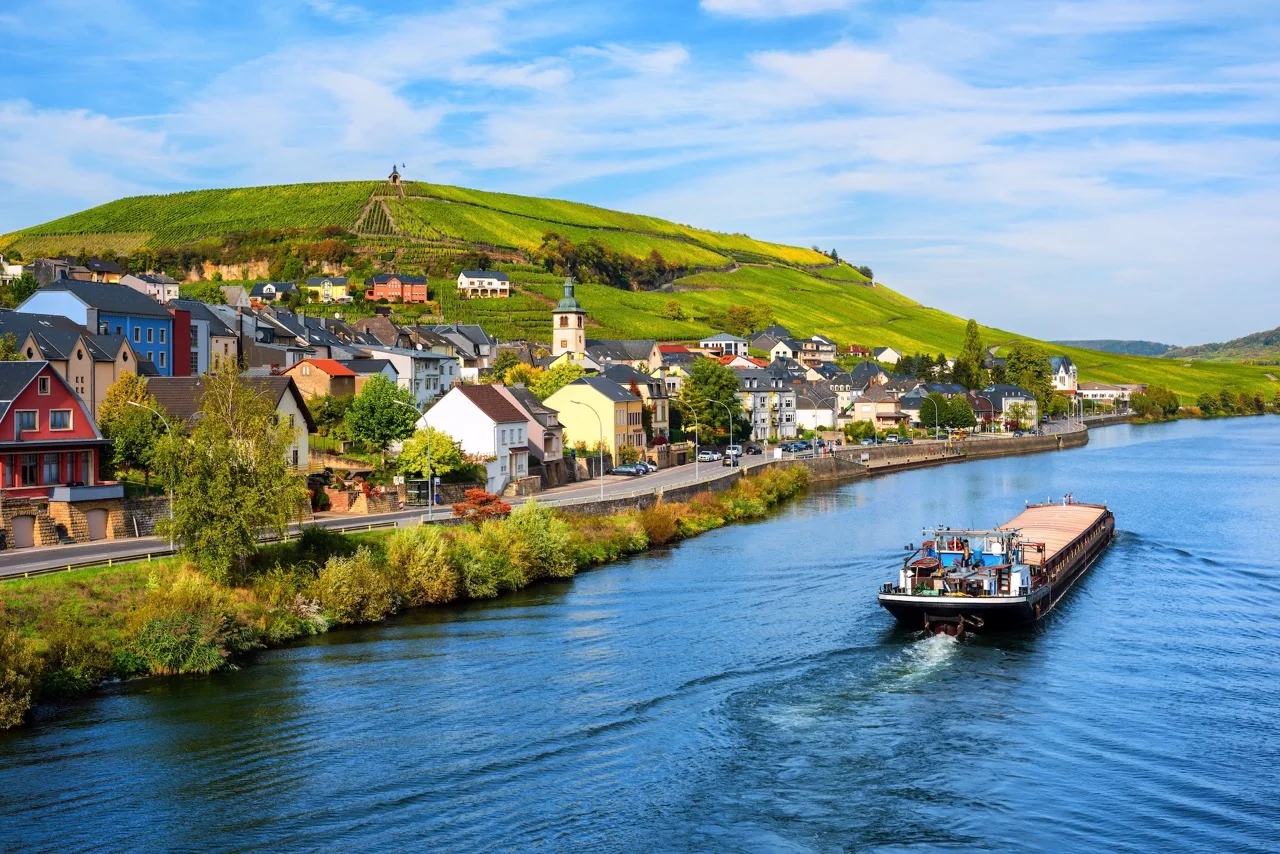
After exploring the capital, we’ll take a scenic drive along the Moselle River to the village of Schengen at Luxembourg’s south-eastern tip. Don’t let its size fool you – tiny Schengen made huge headlines in 1985 when the Schengen Agreement was signed here, paving the way for passport-free travel across much of Europe. On arriving, we’ll be standing at the crossroads of three countries: Luxembourg, Germany, and France. In fact, the spot is sometimes called the “Magic Triangle” because it’s where those borders meet in the middle of the river ! We’ll start at the European Museum Schengen , a delightful and informative center that reopened in June 2025, just in time for the 40th anniversary of the Schengen Agreement . Inside, interactive displays and exhibits take us through Europe’s journey toward unity – from early ideas of cooperation after WWII to the expansion of the EU and the creation of the Schengen Area. You can even see a copy of the original 1985 agreement , signed on board a riverboat by five countries (Luxembourg, Belgium, Netherlands, France, West Germany). I love the exhibit that lets you experience a mock border checkpoint – it really makes you appreciate being able to cross borders freely today.
Just outside the museum stands the Monument of the Schengen Agreement : three tall steel columns with stars, representing the first three signatory nations (Benelux, France, Germany) . We’ll snap a photo here – one foot in Luxembourg and an outstretched arm toward Germany perhaps – to celebrate the spirit of a borderless Europe. You’ll also notice the flags of all current Schengen countries waving proudly along the riverfront. A short walk away is the “Circle of Stars” sculpture , crafted from sections of the Berlin Wall. Each piece is painted with the flag of a country that joined the Schengen zone – it’s a vivid symbol of European unity born from former division. I’ll point out Luxembourg’s section proudly marked with our red, white, and light-blue flag.
While in Schengen, we cannot miss the chance to enjoy its local flavor . This area is part of Luxembourg’s Moselle wine region , famed for crisp white wines. If you’re interested, we can pop into a nearby winery or wine cooperative for a quick tasting – after all, European unity is best toasted with a good Riesling! We’ll also stroll the calm banks of the Moselle. On a sunny day, the river sparkles and you can see Germany’s vine-covered hills just across the water. There’s a small bridge where you can literally walk over into Germany with no checkpoint – a simple act that was a dream decades ago. I always find that moment quietly powerful.
Surprising Stories & European Insights
One surprising fact you’ll learn is that Luxembourg City was the first seat of the European Coal and Steel Community (ECSC) in 1952, the precursor to the EU. In other words, Europe’s path to unity really got started here – the grand project of pooling coal and steel among countries began in Luxembourg’s very own town hall building . This often amazes my guests: who would think this little capital played host to Europe’s first institution? We’ll talk about characters like Jean Monnet and Robert Schuman walking Luxembourg’s streets, planting the seeds of the Union. Another interesting tidbit: Luxembourg’s population is almost 50% foreigners today, hailing from all across Europe – a direct result of hosting EU institutions and international companies. So when you’re in Kirchberg grabbing a coffee, you might hear French, German, English, Italian, and more, all at the next table. It’s a living example of European multiculturalism.
In Schengen, I’ll share the quirky story of how the agreement was actually signed on the MS Princesse Marie-Astrid , a ship floating in the middle of the Moselle (to avoid choosing one country’s soil over another!). There’s even a replica of the ship’s captain’s hat and signing table in the museum, which always makes people smile. We’ll also reflect on the significance: in 1985 only five countries signed; today 26 countries are in the Schengen Area, from Spain to Poland – meaning you can drive thousands of kilometers across Europe without a passport checkpoint. As someone who grew up when borders still meant stops and stamps, I can convey how transformational that has been.
Prefer a private route instead of planning every connection?
Tell us your travel date, group size and interests. We will suggest the best route.
Ask for a routeTips for Your European Expedition
• Bring your passport… for fun: While you won’t need it to cross any borders on our trip, the European Museum in Schengen offers a novelty passport stamp for visitors. It’s a cool keepsake to get a “Schengen” stamp showing the date you visited the birthplace of open borders.
• Dress for the day: We’ll be partly outdoors (Schengen riverside, city walking) and partly indoors (museum, EU buildings exterior). Wear comfortable shoes and dress in layers. Kirchberg can be breezy, and along the Moselle river it might get windy too. In cooler months, a windbreaker or scarf helps when standing by the water’s edge.
• Photos and etiquette: Feel free to take photos outside the EU buildings in Luxembourg City – the architecture is striking. However, security is present, so avoid photographing the guards or secure entrances directly. In Schengen, everything is very relaxed; you can freely photograph monuments and the lovely scenery of three countries in one frame.
• Timing: If possible, I schedule this tour on weekdays, because the Europa institutions vibe is more alive – you see EU staff hustling about and maybe we can catch an open café in the European Quarter. The museum in Schengen is usually open daily (and it’s free entry , yay). We’ll check their opening hours to ensure we have enough time inside – typically around an hour is perfect to explore the exhibits.
• Enjoy local tastes: Consider this tour not just brain food but also a chance for literal food! In Luxembourg City, I can take you to Place d’Armes or Grund for lunch where EU interns and locals mingle – perhaps try Gromperekichelcher (potato fritters) or a French quiche. In Schengen, do try a glass of Auxerrois or Pinot Gris (just a taste if you like) – the vineyards around produce excellent wine. I always carry water and some snacks in case our discussions run long and hunger strikes between stops.
By the end of the European Luxembourg tour, you’ll have walked the halls (and plazas) where pivotal decisions are made and stood in the very spot that changed Europe’s map by removing borders. It’s a journey that connects grand history with the everyday benefits we Europeans now enjoy. I can’t wait to share the pride I feel in Luxembourg’s contributions – from pioneering European cooperation in the 1950s, to giving its name to an agreement that lets over 400 million people travel freely. This tour isn’t just sightseeing; it’s about understanding how a small country can have a big heart for European unity . And trust me, you’ll see Europe in a whole new light after experiencing it through Luxembourg’s lens!
Private Tour Routes Mentioned in This Guide
- Moselle Wine, Schengen & Beaufort Castle: Experience the birthplace of open-border Europe, Luxembourg’s Moselle vineyards and the atmospheric medieval ruins of Beaufort Castle in one private day.